Showing posts with label kids. Show all posts

Tuesday, August 6, 2024

Oh, patents! Ikea heart raccoon night light

Copyright © Françoise Herrmann

The IKEA Luriga heart raccoon night light squeezes on, and dims off. The design patent USD838896S1, titled Lamp, was awarded on January 22, 2019 to Tina Alnaes, the Swedish designer of the child LED night light. Below, the patent Figure 1 and an image of the marketed product.


Incidentally, the brand name IKEA is an eponymic acronym that stands for:
  • (IK) Ingvar Kamprad, the initials of the founder’s name
  • (E) Elmtaryd, the family farm where Kamprad was born, and
  • (A) Agunnaryd, the name of the village where Kamprad grew up. 
Reference
Ikea (website)
www.ikea.com

Monday, August 5, 2024

Oh, patents! IKEA hedgehog night light

Copyright © Françoise Herrmann

A search for IKEA patents returned 5716 patents, which should explain, at least partly, the timelessness, craftpersonship, and success of so many IKEA products. Founded in 1943, in Sweden, IKEA is now a multinational company, the largest retail furniture company in the world since 2008.

The IKEA design for the corded and battery-operated, Luriga hedgehog, LED night light for kids, is a patented invention. The child-friendly lamp is soft with two settings, white and color-changing, fading in and out of green. An internal timer slowly switches off the lamp. However, it is the way the invention looks that was patented—the ornamental hedgehog aspect of the night light. The US design patent, USD847401S1, titled Lamp, was awarded to Tina Alnæs, an industrial designer, on April 30th, 2019.

Below, the Figure 1 extracted from the patent shows a perspective view of the inventive design. An image of the marketed Luriga hedgehog LED night light is also shown below the patent figure.


Reference
IKEA
www.ikea.com

Wednesday, September 27, 2023

Oh, patents! Kidrobot® Dunny™ collectibles (1)

 Copyright © Françoise Herrmann

Founded in 2002 by the serial entrepreneur, author, filmmaker, designer, and programmer, Paul Budnitz, Kidrobot® is a custom, limited edition, collectible-designer-toy company that also produces signature apparel and lifestyle accessories. Dunny™, launched in 2004, is a blank platform toy, that was originally given to street artists to customize, and then sold as limited edition collectibles, ushering in the world 3D designer maker toys.

The name Dunny™ is a portmanteau term that combines “Devil + Bunny”, used in street art. The rest is history, because Kidrobot® Dunny™ collectable designer toys have sold worldwide, in partnership with mega toymakers such as Sanrio, Disney, and Hasbro,; as well as museums, such as The Metropolitan Museum of Art in New York City, for whom more than 150 Dunny™ art designer toys were produced. Additional blank designer collectible toys were made in partnership with famous fashion designers such as Louis Vuitton, Prada, Hermes, and Karl Lagerfeld. In fact, the original Kidrobot® company was acquired in 2014 by the National Entertainment Collectibles Association Inc., after having written the book on designer collectible toys in the adult world.  


Kidrobot® Dunny™ brings together art, creativity, 3-D printing and maker entrepreneurship, which means that such opposites are no longer conflicting forces for the founder of Kidrobot® and his friends. The artists commissioned to make the collectibles, and everyone else who has followed suit, making designer toys for personal or more lucrative purposes, or who have worked to customize the original blank Dunny™.


Below, the patented doll, with the head that rotates 360-degrees, and mobile arms, infinitely customisable, with big bunny ears for Dunny™, softer vinyl movable parts like Munny™, and lately the Superplastic®, superlimited, designer figures that are 3D rendered, becoming animated in videos. 


The recently expired US design patent  USD569454S, titled Doll, was originally awarded on May 20, 2008.   Below, the patent Figure 1 drawing, together with eight collector Dunny™ toys.  the dotted lines are not part of the claimed design. 


References

Kidrobot® website

www.kidrobot.com

Kidrobot® – About us

https://www.kidrobot.com/pages/about-us 

Kidbobot® blog

https://www.kidrobot.com/blogs/kidrobot-blog 

Paul Budnitz

https://budnitz.com/

What is a Dunny™?

https://www.kidrobot.com/pages/what-is-a-dunny 

Kidrobot® Dunny™ collections

https://www.kidrobot.com/collections/dunny

Superplastic®

https://superplastic.co/

Friday, December 30, 2022

Oh, kids! Gitanjali Rao, young inventor

Copyright © Françoise Herrmann

What were you doing, when you were 10 years old? According to the USPTO inventor-profiling series, Journeys of innovation, 10-year old Gitanjali Rao was compelled to figure out what she could do to help remove lead from contaminated water in Flint, MI. A story she had heard on TV News, which led her to think that kids, just like her, were drinking contaminated water in their community, and getting sick. She thought that there must be a way to remove such dangerous substances. No wonder that in 2020, at fifteen years of age, Gitanjali was featured as Time Magazine Kid of the Year. No wonder, but how extraordinary!

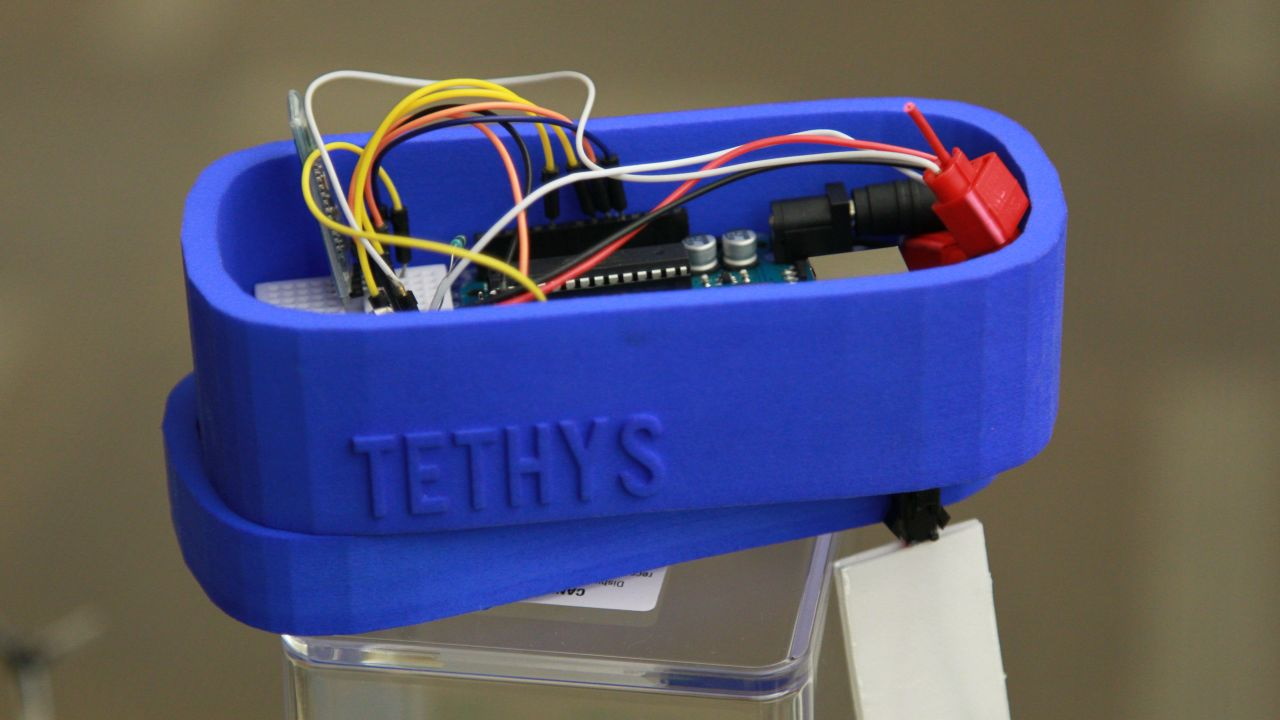
Her first invention, titled System and method for detecting contaminants in water was awarded the US utility patent US11085907, on August 10, 2021. The invention, called the Tethys, after the Greek Titan Goddess of fresh water, recites the use of carbon nanotubes to detect unsafe drinking water, containing lead. Specifically, the invention comprises a carbon nanotube sensor, configured to detect one or more contaminants in the water. When the sensor is dipped in water, lead binds to the chloride ions of the sensor, creating lead chloride molecules, which increase resistance to the current, inside the nanotube. In general, the amount of lead detected is proportional to the increase in resistance to the current. 

Then, the microcontroller, connected to the carbon nanotube sensor, determines the level of contamination of the water, based on the difference between the resistance encountered inside the nanotube, and a set of pre-existing resistances. Finally, depending on whether the difference is found above, or below, two different threshold levels, the water is then determined safe, moderate risk, or unsafe for drinking. The results are sent via wireless Bluetooth® connection to a mobile device, where they are gauge-displayed.

Below, an image of the Tethys system prototype inside its housing, together with the patent Figure 3D, depicting the water decontamination device 300, and insulating cartridge 303, comprising the carbon nanotube sensor. Both the image of the prototype, and the patent Figure 3D, depict the system inside a housing, designed to protect all the components of the Tethys system.  


The image of a Marvel comic book cover, depicting Genius Gitanjali, the young Tethys inventor, is also included below, together with the abstract of her first invention. 
Devices, systems, and methods for detecting contaminants in water are provided. A device may include: a sensor configured to detect one or more contaminants in a liquid when the sensor is dipped into the liquid; a computing device connected to the sensor, the computing device being configured to determine a resistance of the device when the sensor is dipped into the liquid; and a wireless electronic device connected to the computing device via one or more wireless links and configured to receive the resistance of the device when the sensor is dipped into the liquid from the computing device, and the wireless electronic device determines a level of contamination in the liquid based on a difference between the resistance of the device when the sensor is dipped into the liquid and a set or predetermined resistance. [Abstract US11085907]

References

Gitanjali Rao - Time Kid of the Year 2020.
https://time.com/5916772/kid-of-the-year-2020/

Prisco, J. (Feb. 15, 2018). Gitanjali Rao wants to make polluted water safer with lead-detection system.
https://www.cnn.com/2017/11/28/health/gitanjali-rao-young-scientist-winner/index.html

USPTO – Journeys of innovation: One girl’s commitment.
https://www.uspto.gov/learning-and-resources/journeys-innovation/field-stories/one-girls-commitment

Saturday, November 19, 2022

Oh, patents! Squaregles® Oggs™!

Copyright © Françoise Herrmann
Squaregles® magnetic building-tile kits might be combined with manipulable, multi-piece toy sets with interchangeable parts, called OGGS™. These small cuties comprise three independent and cooperating parts: 1. a head with face features, 2. a base such as a toy robotic body part, or a toy car part, and 3. an attachment part such as a helmet or hair, serving to connect the head and base parts. The OGGS™ are thus designed to be manually, and easily, assembled, re-assembled, configured and re-configured, to roll around, or to stay put, according to a child’s fantasy play world, and available interchangeable parts.

OGGS™ are a patented invention. The US utility patent, US20190217212A1, titled Manipulable multi-piece toy, was awarded, on July 18, 2019, to Joseph Kelley and Noah Ornstein, both OGGS™ inventors. The invention seeks to provide a toy that is easily manipulated and produced, while still remaining customizable, adjustable, reconfigurable, and usable in different play worlds. For example, the OGGS™ spherical head part with face features is also made of rubber, so that it can be used as a small ball that bounces, or a marble that rolls around, independently from a base or attachment part.  Base or attachment parts, which once connected or reconnected to the OGGS™ spherical head, provide their many different identities, for example, as an alien, a robot, a humanoid, a pilot, a driver or boat captain. The patent thus discloses some of the possibly boundless OGGS™ assemblies and configurations.

The patent Figure 1 displays an exploded view of a manipulable, multi-piece OGGS™ toy 10, in a disassembled configuration. The disassembled OGGS™ toy configuration 10 comprises a spherical (head) part 12 with face features 26, a base part 14, embodied as a car with wheels 32, and axle 38, and an attachment part 16, embodied as a helmet. The attachment (helmet) 16, has a housing 50, with a hollow cavity 24, designed to cooperate with the upper portion 42 of the spherical (head) part 12. The base (car) 14 has a receiving seat or depression 20, forming a recess 46, designed to cup the lower portion 36 of the spherical (head) part 12. The spherical (head) part 12 is secured within the depression 20, of the base (car) 14, using the extensions 28 of the attachment (helmet) 16. The extensions 28, of the attachment (helmet) 16, are designed to cooperate with the tabs 30 of the base (car) 14. The extensions 28 of the attachment (helmet) 16, are further equipped with small beads 44, which engage the fastening elements 18 of the base (car) 14, comprising small depressions 40, on the tabs 30. Thus, children are able to snap all the parts together and to pull them apart, to exchange and reconfigure their OGGS™, in their play.

The scope of the Squaregles® OGGS™ invention extends to many varying bases 14, such as, for example, trucks, tractors, cycles, motorcycles, rail crafts, boats, personal watercrafts, snow mobiles, spacecrafts or surfboards, as well as varying bases in the shape of animal, insect, robotic or humanoid bodies. Likewise, many different sorts of attachment pieces 16, designed to cooperate with the bases 14, for the purposes of securing the spherical OGGS™ parts 12 (i.e., heads with facial expressions), also fall within the scope the OGGS™ invention. 


Below, a YouTube video, all about OGGS™, together with the abstract of the invention. 


A manipulable multi-piece toy having a spherical body that is removably captured between a base and an attachment member is provided. The base and the attachment member are configured to have portions of a coupling element associated therewith. The base also has a depression with curvature for receiving and securely retaining a first portion of the spherical body in its assembled configuration. In some configurations, the depression comprises a seat with geometry that mates with geometry of the spherical body. By one approach, the base includes a vehicular or figure body. In another aspect, the attachment member includes, for example, a helmet, a hat, a headdress, hair, horns, ears, and/or a mask. [Abstract US20190217212A1]
Reference
Squaregles® (website)
https://squaregles.com/

Thursday, November 17, 2022

Oh, patents! Squaregles® frames

 Copyright © Françoise Herrmann

The design of Squaregles® frames is also patented. The US design patent USD867263S1, titled Toy building frame, was awarded on November 19, 2022, to John Kelley and Noah Ornstein, both co-founders of Squaregles® and the inventors of the construction toy. 

The patent figure below depicts two embodiments of the triangular Squaregles® frames, where oblique lines represent transparent or translucent pieces, and broken lines represent aspects of the design, unclaimed in the patent. Images of boxed Squaregles® construction triangles, and of children assembling the magnetic triangle frames and panels, are also  included.
 
USD867263S1


As a reminder, a design patent only covers the ornamental aspects of an invention (i.e., what the invention looks like) vs a utility patent that describes how the invention functions (i.e., what the invention does). (MPEP Section 1502.01)


References

MPEP – Chapt. 1502-01 - Distinction between design and utility patent.   https://www.uspto.gov/web/offices/pac/mpep/s1502.html 

Squaregles® (website)

https://squaregles.com/

Wednesday, November 16, 2022

Oh, patents! Squaregles® panels

 Copyright © Françoise Herrmann

The designs of Squaregles® magnetic building panels are also patented inventions. For example, the US design patent, USD868169S1, titled Toy building panel, covers two embodiments of a Squaregels® tower panel. The patent was awarded on Nov. 26, 2019, to Joseph Kelley and Noah Ornstein, both cofounders of Squaregles®, and the inventors of the Squaregles® construction game. 

The patent figure drawings below show two embodiments of the invention design. The oblique lines appearing on one of the figures indicate a transparent or translucent surface, whereas broken lines, on both embodiments, indicate aspects of the design that are unprotected. The patent figures are shown together with the image of a marketed Squaregles®  set, showing the patented design panels assembled as a translucent yellow tower.  


Reference
Squaregles® (website)
https://squaregles.com/


Sunday, November 13, 2022

Oh, patents! Squaregles®

Copyright © Françoise Herrmann

Pop! Click! Snap! Squaregles® magnetic frames, panels, bridge clips, and Oggs™, are all about building, imagination, problem-solving, and Getting lost in play®. Award-winning, STEAM(1) toy, Squaregles® is also a patented invention.

The US utility patent, US10918963B2, titled Magnetic building tiles, granted to Noah Ornstein and Joseph Kelley, on February 16, 2021, is one of a dozen patents, reciting the Squaregles® invention. Specifically, this patent discloses all the various toy-building components of the Squaregles® invention, in 95 patent figure sheets, the 15-page description of their endless combinations, and 44 claims. 

Compared to the prior art of toy building kits that might replicate a particular model, the Squaregles® toy building kits are designed to combine and recombine endlessly, according to a child’s fantasy and imagination-at-play. Furthermore, Squaregles® are not only reconfigurable, the building kits are also customizable and alterable, according to each child’s creativity. Thus, for example, the building tiles not only connect and disconnect, using magnets, clips or other means, the tile frames are also connectable to varying building elements. Similarly, tile panels can also be colored, decorated and graphically altered.

Below, the patent Figure 2 depicts an exploded square magnetic tile 10, comprising a tile frame 12 and an exploded tile panel 18 with two tile panel walls, 26 and 28. The tile frame 12, in Figure 2, is shown comprising two portions, 14 and 16, which may be connected together, using the connection mechanism 22. A releasable, snap-fit, magnetic connection 22, comprising two joint portions, 32 and 34, that are designed to mate. The snap-fit connection mechanism 22 of the two tile frame portions, 14 and 16, enables to securely bring a tile panel 18, together with a tile frame 12. Conversably, the snap-fit magnetic connection 22 is also releasable, so that tile panels are removable and exchangeable, when both portions of the tile frame, 14 and 16, are pulled apart.

The Figure 2 further depicts a series of brick-shaped magnets 20, inserted inside the sides of the tile frame 12. The inserted magnets 20 enable one side of a magnetic tile 10 to connect with the side of another magnetic tile 10, also square, or of triangular shape. Within the sides of the tile frame portions, 14 and 16, the magnets 20 might otherwise have different cylindrical or spherical shapes, so that they are able to rotate, in view of adjusting their polarity, when in contact with the magnets of other building tiles.


The abstract of the Squaregles® invention is included below.
A building system includes a plurality of building tiles and / or connectors that are magnetically and releasably connectable to one another. The magnetic building tiles are comprised of a tile frame and a tile panel. The tile frame, by one approach, is comprised of two connectable frame portions or elements having magnets embedded therein. The first and second frame elements are connectable to one another through a snap, clip, or another similar connection mechanism. The first and second frame elements are connectable around or into the tile panel, which is removable from the magnetic building tile. The tile panel or the tile frame has a channel into which the other of the tile panel or tile frame extends to secure the two pieces together. In another approach, the tile frame is a single element and the tile panel may snap or attach thereto, such as, for example, through fasteners or friction. [Abstract US10918963B2]

Note
(1) The Acronym STEAM indicates a toy that requires the application of Science, Technology, Engineering, Art and Math, while building.


Reference
Squaregles® (website)
https://squaregles.com/

Wednesday, December 29, 2021

Oh, patents! Purrble™

 Copyright © Françoise Herrmann

Precipitated by a concern for the increased stress that children were experiencing during long lockdown periods, within the context of the COVID 19 pandemic, Purrble™, masterminded by Sproutel Inc., in collaboration with the Committee for Children®, is an animatronic toy, designed to teach children how to self-regulate their emotions. As for the previous Sproutel Inc., toys, such as Jerry the Bear®, targeting children with Type 1 diabetes, and My Special Aflac Duck®, designed for children undergoing cancer treatment, the researched idea, informing the design of the toys, is that, if children are able to care for their special toys, they will not only learn about the ailments that they share with their toys, they will better understand their own treatments, and be able to better cope, with less fear, and anxiety.

With Purrble™, this means learning how to soothe-down-to-a-purr the racing heartbeat of a small, plush, koala-looking toy, called the Purrble™. The assumption is that the experience of soothing Purrble™ will assist children in calming their own emotions. Different from Jerry the Bear® and My Special Aflac Duck®, Purrble™ was designed to be used mostly at home, or at school, outside of medical and hospital contexts. The “live animal” boxes in which Purrbles™ are packaged were even conceived for possible use as little play beds or houses for the plush toy. Made of cardboard, the boxes can also be decorated.  But Purrble™ is much more than a battery-operated plush toy.

With sensors responsive to both calming caress, or fidgeting, coupled to internal controllers for vibration of the accelerating or decelerating heartbeat, and a speaker to produce purring sounds, and simple grunts, sighs and giggles, Purrble™ falls well within the scope of the far more complex animatronic toys, designed and patented by Sproutel Inc., in collaboration with companies such as The American Family Life Assurance Company (AFLAC). In any event, much like its predecessors in the medical domain, Purrble™ took the market by storm, enchanting the 3+ crowd, cooped up in lockdowns with emotions on edge, while promising that potential gains in emotional regulation are “a determinant of lifelong success, being linked to improved graduation rates […]”. (About Purrble™)

Below, an image is included of the cute marketed Purrble™ products, no two of which are completely alike. Also included, a short YouTube video, featuring Sproutel Inc., founder and CEO, Aaron Horowitz, and Kate Gallo, Consultant for Product Management at the Committee for Children®. 

Time Magazine selected the Purrble™ as one of the 100 best inventions of 2021.


References 

Committee for Children® https://www.cfchildren.org/

Sproutel Inc. https://www.sproutel.com/

Time Magazine – The 100 best inventions of 2021. Keeping Kids calm: Sproutel Purrble™.

https://time.com/collection/best-inventions-2021/6113137/purrble/

Tuesday, December 28, 2021

Oh patents! My Special Aflac Duck® (2)

Copyright© Françoise Herrmann 

In addition to utility patents, Sproutel’s My Special Aflac Duck® was also awarded a US design patent. The American Family Life Assurance Company (AFLAC) filed an application for a US design patent on January 5th 2018. The US design patent, USD846040S1, was granted on April 16th 2019, awarded to a team of seven inventors, and assigned to AFLAC, for a duration of 15 years.

As a reminder, a design patent covers the ornamental aspects of an invention, or how an invention looks. In contrast, a US utility patent covers the functional aspects of an invention, how the invention works, and/or is fabricated.  Per the USPTO Manual of Patent Examination Procedure:

 “a utility patent” protects the way an article is used and works (35 U.S.C. 101), while a “design patent” protects the way an article looks (35 U.S.C. 171) [MPEP Chapt. 1502.01; [R-07.2015]].

Below, the patent Figure 1 of 11 drawings, showing a perspective view of the duck with beak open. The eyes, feet, and sensor, on the duck’s chest, are drawn with broken lines to indicate that they are excluded from the claimed design. Such components of the duck are covered in utility patens related to the animatronic and user interface aspects of the invention. A YouTube video of My Special Aflac Duck®, helping kids cope with a cancer diagnosis, is also included below. 


References

My Special Aflac Duck®  https://aflacchildhoodcancer.org/myduck.cfm

Sproutel Inc.  https://www.sproutel.com/

USPTO MPEP – Chapt. 1502-01 – Distinction between design and utility patent.
https://www.uspto.gov/web/offices/pac/mpep/s1502.html

Sunday, December 26, 2021

Oh, patents! My Special Aflac Duck® (1)

 Copyright © Françoise Herrmann

My Special Aflac Duck®, a plush, Bluetooth®-connected social robot, masterminded by Sproutel Inc., was designed to help small children express their feelings, when they are undergoing cancer treatment. Children simply select one of several emoji cards that best matches the way they are feeling (sad, calm, scared, sick, silly…), and hold it up for the Aflac Duck® to see (and scan). The Aflac Duck® then responds to the feeling (in duck language), also moving its beak and head.

In addition to facilitating communication in families, coping with the new normal of a cancer diagnosis, the Aflac Duck® also has a series of medical play accessories for simulated activities. For example, medical play accessories include: a pulse oximeter, a syringe, a stethoscope, and a connected IV play set, enabling children to attach a port-o-cath accessory, in order to treat the duck with chemotherapy. As for previous Sproutel pediatric toys, such as Jerry the Bear™, which offers pediatric patients an opportunity to practice mastering the simulated medical procedures associated with the treatment of Type 1 diabetes, the assumption informing the design of the company’s toys is that, in caring for their toy, children also learn to understand their own disease and treatment. Thus, Sproutel toys offer an educational experience, delivered without a curriculum. An educational experience intended to be fun, designed to comfort, and to reduce fear and anxiety.

Beyond facilitating communication, and offering simulated medical play experiences, related to the treatment of cancer, the Aflac Duck® comprises the following additional features and functions:
  • Removable fur, so that the Aflac Duck®’s coat is machine-washable. 
  • Sensitivity to surroundings, such as for example, sensitivity to dark, which prompts the Aflac Duck® to quieten down; or sensitivity to music, which prompts the Aflac Duck® to dance. 
  • Sensitivity to touch, which prompts the Aflac Duck® to respond to tickling. The Aflac Duck® also has a heartbeat that children can feel.
  • Additional food accessory cards, with which children can also prepare a meal for their special toy. In this case, the accessory food cards are held up to the Aflac Duck®’s beak for pretend feeding (and scanning). 
  • Soothing Soundscape™ card accessories, enabling to transport children, with music, to places like the forest, or the ocean. 
  • Finally, a wake-up function, considering that when the Aflac Duck® is tired, it naps, and is awakened when children squeeze its tail.
The various aspects of the Aflac Duck® invention are recited in three concurrent US utility patent applications. For example the US utility patent application US20190209933A1, titled Child's Toy with Removable Skin recites the machine-washable aspect as the duck's coat, whereas the US utility patent application US20190209935A1, titled Animatronic toy recites the movement of the robotic toy, and the US utility patent application US20190209932A1, titled User Interface for an Animatronic Toy, recites interactions between the toy, its users, another Aflac Duck®,  and/or a Bluetooth®-connected mobile device. 

Below, the patent Figures 1 and 2, extracted from the user interface patent application, US20190209932A1, together with an image of the embodied toy, marketed as My Special Aflac Duck®. Specifically, the Figures 1 and 2 respectively depict the duck, with and without its skin. The Figure 1 drawing shows the animatronic toy embodied as a duck 100, comprising eyes 110, a beak 115, wings 120 and feet 125, as well as a sensor 130, which may be of various sorts, causing the duck to respond in a variety of ways. 

The Figure 2 drawing of the toy 100, with skin removed, further depicts the various sorts of sensors, comprising in particular five capacitive sensors 200, located on the duck's wings, side of the head, and back. Once activated the capacitive sensors 200 are designed to cause the duck to vibrate, using one of more vibration motors located within the duck, and/or to make nuzzling sounds like a pet. Two button sensors 210 are also depicted, which are used respectively to wake the duck from sleep or nap, and to trigger or detect a Bluetooth® connection, or interaction, with another toy. The vibrational speaker 230, on top of the duck's head, also enables the duck to vibrate, and to respond to the emoji cards. A radio frequency ID (RFiD) sensor 225, located on the chest of the toy, enables the duck to read and detect the RFiD tagged emoji cards 400, brought in contact with the sensor. Once detected, the RFiD sensor 225 triggers a program, which will cause the duck to respond. For example, the duck might giggle, when contacted with a tagged happy emoji card. Alternatively, the duck might cry, when contacted with a sad emoji card.


The abstract for the user interface patent application US20190209932A1, is included below. 

An animatronic doll is disclosed. The doll, includes multiple sensors, one or more of which receives input which causes the doll to perform various functions such as moving, vibrating, playing music, eating, interacting with a mobile app or interacting with another doll. The doll also includes various modes which may be effected or selected based on input from one or more sensors. One of the sensors may include an rfid reader which reads cards that instruct the doll to emulate a particular emotion.

My Special Aflac Duck® was selected by Time Magazine as one of the 50 best inventions in 2018. The toy also received numerous additional accolades (1). Most importantly, the insurance company Aflac distributes My Special Aflac Duck®, free-of-charge, to children diagnosed with cancer.

Note

(1) My Special Aflac Duck® won four awards at the 2018 Computer Electronics Show, in Las Vegas (CES 2018): Best of CES 2018 Award in the category of Best Unexpected Product; Best of CES 2018 in the Tech for a Better World category; Best of CES 2018 in the Best Accessibility Tech category; and Best of CES 2018 in the Robotics or Drone category. My Special Aflac Duck® also won a top 2019 SXSW Award in the Robotics and Hardware category. 

References

My Special Aflac Duck®.
https://aflacchildhoodcancer.org/myduck.cfm

My Special Aflac Duck® - User Manual.

My Special Aflac Duck® Takes Home Best of CES 2018 Award. 

My Special Aflac Duck® wins 'Tech for a Better World Award'. (@CES 2018)

My Special Aflac Duck® wins big at SXSW.

Ten best Robots of CES 2018.

This robot therapy duck comforts kids with cancer. 

Time Magazine – A companion for kids with Cancer, 50 Best invention 2018. 
https://time.com/collection/best-inventions-2018/5454382/my-special-aflac-duck/

Wednesday, December 22, 2021

Oh, patents! Jerry the Bear™ (2)

 Copyright © Françoise Herrmann

Sproutel’s original 2012 Jerry the Bear™ pediatric toy was awarded a US design patent.  As a reminder, a US design patent covers the ornamental properties of an invention. In other words, a design patent protects the way an invention looks, in contrast to how an invention works, which is protected in a utility patent. The US design patent, USD714884S1, titled Educational doll for children with chronic illness, was awarded on Oct. 7, 2014.

Below, the extracted patent Figure 1 drawing of the educational doll, embodied as a bear, together with an image of the earlier marketed Jerry the Bear™ toy. Both the patent Figure 1, and the image of the marketed bear, display the bear’s Glucopal, a small screen on the bear’s belly, through which children interact, to the play with Jerry the Bear™. 

Ten food cards are visible in front of the marketed image of the bear. Food cards, which the children hold up to the bear’s snout for feeding (i.e., scanning). Before feeding the bear, children organize the food cards into snacks and meals, counting “dot” carbs’. Each carb dot is equal to a dot of insulin, required before the bear snacks or has lunch. The bear’s insulin pen is also visible on the image of the marketed bear. Children use the insulin pen for supplying insulin at the bear’s marked injection sites, on arms and legs. Glucose testing is performed by squeezing the bear’s finger buttons. Glucose test results are then displayed on the Glucopal, for interpretation of blood sugar levels (i.e., hyper- or hypo- glycemic, plus variations). 

Jerry the Bear™ also has tickle spots on his ears, and secret tickle spots on his back. The Figure 1 patent drawing shows the ear tickle spots, the finger glucose testing buttons, the triangle leg injection sites, and foot pads, with "dotted lines' to indicate that the US design patent does not cover these aspects of the invention. Tickle spots, marked injection sites, together with the many functional aspects of the invention, briefly mentioned above, including the game storylines that provide coherence to playing with Jerry the Bear™, are all covered in US utility patents.


References

Jerry the Bear™ Quick Start Guide