Showing posts with label Rose de Granville. Show all posts

Friday, April 19, 2019

Oh Dior! Rose de Granville cosmetics

Copyright © Françoise Herrmann

Since November 2013, Dior cutting-edge science is carried out at the LVHM Perfume and Cosmetics Research Center in Saint Jean de Braye, located at the Parfums Christian Dior compound. LHVM, the Moêt-Hennessy-Louis Vuitton luxury goods conglomerate, includes Dior as major shareholder, together with 69 additional prestigious luxury companies such as Givenchy, Guerlain, Céline, Kenzo, Marc Jacobs, Fendi and Loro Piana. 

More than 1000 varieties of roses exist. The preferred rose variety for the formulation of a Dior product marketed as Dior Prestige Micro Rose Oil is the Granville Rose, registered as the Jardin de Granville® rose, patented as a Floriunda rose variety, named Evanrat (US plant patent PP24658).

The Dior Prestige Micro Rose Oil cosmetic product delivers to the skin the Rose de Granville's own vitality and energy via 10,000 micro-pearls. The advanced delivery system offers the penetration of a serum and the comfort of oil. Dior Prestige Micro Rose Oil is a  booster designed to maximize the effectiveness of any daily moisturizing routine.

The Dior Micro Rose Oil pre-serum was awarded the WIPO (World Intellectual Property Organization) patent WO2018210947A1 titled Cosmetic composition comprising rose extracts. LVHM applied for the patent on May 16, 2018. The application was published on November 22, 2018. The inventors are Marc Dumas [FR], Jocelyn Franchi [FR], Jeronimo Valenti [FR], Virginie Pecher [FR], and Kristell Lazou [FR].

The composition comprises two different Granville Rose extracts: an aqueous rose extract obtained using a patented cryoextraction process, and a rose satin oil extract obtained via a patented dynamic enfleurage process. The in vitro invention research on normal human keratinocyte cells demonstrated that the aqueous extract stimulates the expression of period genes (PER1 and PER3) and the cryptochrome circadian clock 2 gene (CRY 2), while the satin oil extract has a complementary impact on the expression of the period gene (PER2). A set of genes found in every cell, which regulates the natural circadian processes of the skin, and/or the micro-nutritional balance of the skin.

The prior art of cosmetic products brings such micro-nutrients to the skin as vitamins (A, E and C) for protection and nutrition, oleic acid (mono-unsaturated omega 9 fatty acid) for repair, healing and nutrition or  alpha-linolenic (omega 3 fatty acid) because of its anti-inflammatory properties, among others. However, there is also a need to stimulate such processes as hydration, skin regeneration and the protective skin barrier. Thus, the Rose de Granville double extract invention offers to directly impact the expression of clock and circadian rhythm genes of the skin, which are known to regulate such skin processes as hydration, regeneration and repair, or the resistance of the protective skin barrier. 

The extracts were also demonstrated to have an impact on some of the 5000 genes controlled by period and clock genes, 5000 genes that control such pathways as fat metabolism, sugar metabolism, and calcium homeostasis. In particular the inventors found effects on such circadian clock-controlled genes as calmodulin 3 (CALM3), which binds calcium and participates in cellular cycles, and keratin 1 (KRT1) which participates in cellular differentiation, among many others.

Thus, the synergistic invention formulation of the Rose the Granville extracts is designed to have an impact on the natural rhythms of the skin, controlled by circadian clock genes, as well as on some of the clock gene targets, in view of stimulating and /or improving the skin’s micro-nutritional balance, and such processes as hydration, repair, barrier protection and the skin’s fat metabolism.   

The abstract of this invention is included below, together with an image of the marketed Dior Prestige Micro-pearls Rose oil product.

The présent invention relates to a cosmetic composition for topical application to the skin comprising, in a physiologically acceptable médium, at least an effective amount of at least one aqueous extract of rose and of at least one oily extract of rose, and the use thereof in particular for promoting the natural rhythmic process of skin cells and/or improving the micro -nutritional balance of the skin. [Abstract WO2018210947A1]
References
LVHM Hélios Perfume & Cosmetics Research Center – Saint Jean de Braye

Saturday, April 6, 2019

Oh, Dior! Granville Rose plant patent

Copyright © Françoise Herrmann

It takes approx. 900 kg (2000 lbs) of roses to obtain 1 kg (2 lbs) of essential rose oil. Christian Dior grows its own rose varieties. For example, the most famous Dior rose, the Granville Rose, originally a wild rose, was hybridized seven times to enhance its vitality. Over the course of 9 years, Dior science then translated the rose’s vitality into active cosmetic ingredients, capturing, in particular, the rose’s anti-inflammatory properties for cosmetic products designed to combat the aging process.

Eight hundred Granville rose bushes are organically grown in a Dior garden of the Loire Valley. The Christian Dior Museum, which purchased Dior’s childhood seaside residence Les Rhumbs and its adjoining rose garden, is located in Granville, the city that eponymizes this famous Dior rose. 

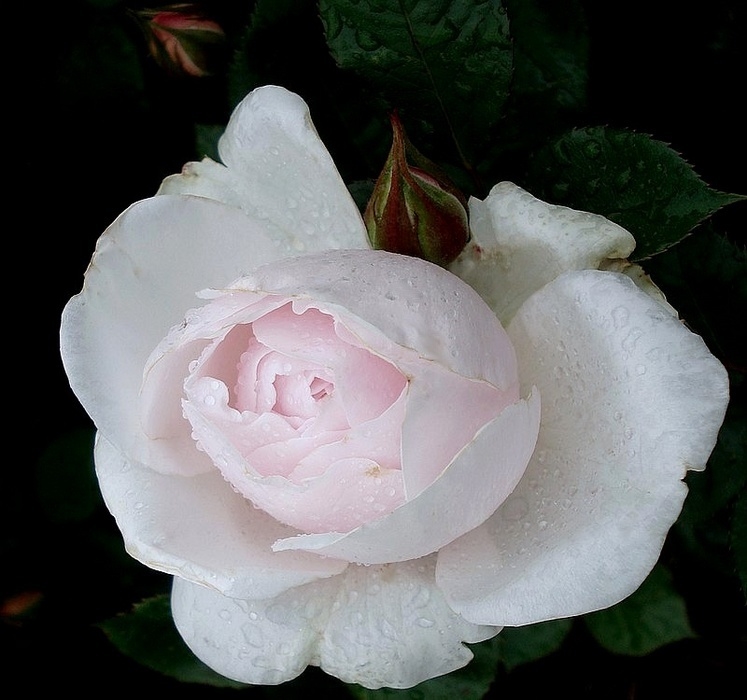
The Rose de Granville, bred by Jérôme Rateau, was awarded US plant patent PP24658, titled Floribunda rose plant named ‘Evanrat’. The patent uncovers the many names of the Granville Rose. The Latin name of the plant is Rosa hybrida. The varietal name is Evanrat. The registered trademarked name of the plant is Jardin de Granville®. The exhibition name of the plant is Rose de Granville. The rose is pink and it ages to white. 

The patent recites the artificial pollination that was used, in France, to crossbreed the rose into a unique varietal. A varietal designed to be different from both its Auscent Floribunda, female, or seed parent, and Dorblant Tea hybrid, male, or pollinating parent. Through horticultural research, identification of a single plant, selected from the crossbreeding, was found to exhibit the desired differences from each parent. In particular, the plant selected displayed attractive ornamental properties for gardens, parks, public areas, and residences, as well as prolific growth. Asexual propagation of the plant in France then demonstrated the stable characteristics of the new varietal, from one generation to the next, thus creating a true-to-type variety, that was named ‘Evanrat’.

In reference to the photographs included as Figures, the patent further describes all the characteristics of the variety in horticultural detail, such as: growth habit, blooming habit, width, height, color, length and diameter; the characteristics of the leaves, stipules, petiole and rachis; and the characteristics of inflorescence, including all the petal dimensions such as petal length, petal width, petal shape, petal reflexing, petal undulation, petal crenelage, petal texture, petal number and petal drop


The abstract of the Granville Rose plant patent is included below, together with the patent Figure 4 photograph. The photograph shows in great detail all of the different parts of the new varietal. An index of the parts referenced in the photograph is included next to the patent Figure 4. An image of the divine Granville Rose is also included above.
A new and distinct variety of Floribunda rose plant is provided that forms in abundance on a substantially continuous basis attractive double blossoms that are light pink in coloration. The buds are pointed and oval in configuration. The vegetation is strong and vigorous and a rounded and bushy growth habit is displayed. The ornamental foliage is dark green with a glossy upper surface and contrasts well with the light pink blossoms. The plant is particularly well suited for providing attractive ornamentation. [Abstract PP24658 ] 


1 two-year twig.
2 twig of the year
3 young shoot
4 - 6 leaves presented respectively by their under surface 4a, 5a, 6a, and 5, and upper surface 4b, 5b, and 6b.
7a - 7m various stages of the new varietal flower blooming
7e - 7m time is approximately 6 days.
8 -12 are petals of the same three days old flower, respectively showing their external surface 8a to 12a and their inner side surface 8b  to 12b.
Petals on the left, of a slightly darker color, correspond to those at the center of the flower. Petals on the right of the figure are those at the periphery 15 of the flower.
13 sepals
13a lower sepal surface
13b upper sepal surface
14 stamens
15 pollen
16 pistils.
Scale in centimeters is also included in Fig. 4.
 [Indexing information extracted from PP24658 ]


References
Christian Dior Museum in Granville
http://www.musee-dior-granville.com/